30-Day Betrayal Recovery Advice Workbook: A Strategic Guide to Healing and Growth
In a world where emotional pain often feels overwhelming, the 30-Day Betrayal Recovery Advice Workbook offers a structured yet gentle approach to healing. Designed for individuals navigating betrayal, heartbreak, or broken trust, this printable guide provides daily insights, affirmations, and journaling prompts that support emotional recovery. Whether you're a woman, a therapist, a life coach, or anyone seeking restoration, this workbook is more than just a collection of exercises—it's a strategic tool for reclaiming peace and moving forward with clarity and compassion.
Why the 30-Day Betrayal Recovery Advice Workbook Matters
The journey through betrayal can be complex and deeply personal. It often involves processing intense emotions such as anger, grief, and self-blame while rebuilding self-trust and setting healthy boundaries. The 30-Day Betrayal Recovery Advice Workbook addresses these challenges with a thoughtful, trauma-aware approach that validates your experience without judgment.
What makes this workbook strategically useful is its focus on intentional healing. Each day includes guided reflections, affirmations, and journaling prompts that help you explore your emotions in a safe space. This structure supports consistent engagement, which is essential for long-term recovery. Unlike generic self-help materials, this guide is designed to align with your emotional needs at each stage of the healing process.
Strategic Use of the 30-Day Betrayal Recovery Advice Workbook
Using the 30-Day Betrayal Recovery Advice Workbook effectively requires intentionality. Rather than treating it as a random exercise, consider how it can support your broader goals and emotional well-being. For example, if you're an entrepreneur or small business owner, the workbook can help you manage stress and maintain emotional balance, which in turn supports productivity and decision-making.
For professionals in coaching or therapy, the workbook can serve as a valuable resource for clients. It provides a framework for guiding individuals through their healing journey while offering insights into mindset shifts, boundary-setting, and self-love. In both personal and professional contexts, the workbook acts as a bridge between emotional pain and growth.
One practical use case is integrating the workbook into daily routines. By dedicating time each day to reflect on the prompts and affirmations, you create a consistent practice that reinforces self-compassion and resilience. This habit-building aspect is key to achieving lasting change.
When to Use the 30-Day Betrayal Recovery Advice Workbook
The 30-Day Betrayal Recovery Advice Workbook is best used during periods of emotional distress or when you're ready to begin the healing process. It’s particularly effective for those who feel stuck in cycles of self-blame, anger, or grief. However, it’s important to recognize that healing is not linear, and the workbook acknowledges this by offering reminders like “you are not broken” and “healing is not linear.”
If you're considering using the workbook, assess whether you’re open to self-reflection and emotional exploration. The guide is designed to be gentle, but it still requires honesty and willingness to confront difficult emotions. If you're in the early stages of recovery, starting with the first few days can help you build a foundation of self-awareness and emotional clarity.
How to Approach the 30-Day Betrayal Recovery Advice Workbook
Approaching the 30-Day Betrayal Recovery Advice Workbook with a clear plan can enhance its effectiveness. Begin by setting specific intentions for your healing journey. Are you looking to rebuild self-trust? To release anger? Or to cultivate self-love? Having a clear purpose will help you stay focused and motivated throughout the 30 days.
It’s also helpful to establish a routine. Choose a time each day that feels most conducive to reflection—whether it’s in the morning, during a break, or before bed. Creating a dedicated space for journaling can further enhance the experience by signaling to your mind that it’s time to engage in meaningful self-care.
Consider using the workbook in conjunction with other strategies, such as therapy, support groups, or mindfulness practices. The guide complements these approaches by providing a structured way to process emotions and reinforce positive changes.
Key Features That Support Long-Term Healing
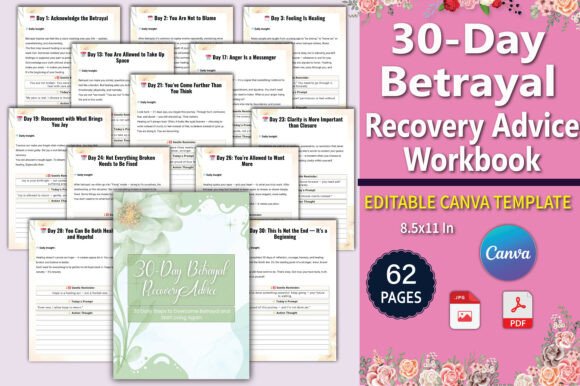
The 30-Day Betrayal Recovery Advice Workbook is designed with several key features that make it a powerful tool for long-term healing:
- Daily Guided Healing: Each day offers a powerful insight, soothing reminder, healing affirmation, and journal reflection to support emotional recovery.
- Emotional Support Mindset Shifts: Covers self-blame, anger, boundaries, grief, forgiveness, trauma awareness, self-love, and hope in a deeply validating format.
- Journaling Prompts: Reflection space every page invites self-expression with space to explore pain, reclaim power, and nurture a renewed sense of self.
- Gentle, Trauma-Aware Approach: Ideal for survivors of emotional pain or relationship trauma — includes reminders like “you are not broken” and “healing is not linear.”
- Printable Format: Designed for easy printing and journaling — perfect for bedside reflection, therapy sessions, or private self-healing rituals.
These elements work together to create a holistic approach to healing that respects your emotional journey while encouraging growth and self-compassion.
Practical Examples and Strategic Observations
Consider a scenario where someone is struggling with trust issues after a betrayal. Using the 30-Day Betrayal Recovery Advice Workbook, they can gradually shift their mindset from self-blame to self-compassion. Daily prompts might encourage them to write about their feelings, set boundaries, and explore what they need to heal. Over time, this practice helps them regain confidence and rebuild a sense of self-worth.
Another example is a professional who uses the workbook to manage stress and improve emotional intelligence. By reflecting on daily insights and affirmations, they develop greater awareness of their emotional triggers, leading to better communication and decision-making in both personal and professional settings.
Strategically, the workbook supports outcomes such as improved mental health, stronger relationships, and increased resilience. It encourages a mindset of growth rather than stagnation, helping users move from pain to purpose.
Risks of Using the Workbook Without Clear Goals
While the 30-Day Betrayal Recovery Advice Workbook is a valuable resource, it’s important to use it with clear goals and context. Without intentionality, the workbook may not provide the full benefits it offers. For instance, if you approach it randomly without a defined purpose, you may miss out on the deeper insights and emotional breakthroughs that come from consistent engagement.
Additionally, using the workbook without understanding its structure or the underlying principles of emotional healing can lead to frustration or confusion. It’s essential to recognize that healing is a process, and the workbook is designed to support you along the way, not as a quick fix.
Intentional Use for Maximum Impact
To get the most out of the 30-Day Betrayal Recovery Advice Workbook, use it intentionally. Start by identifying your emotional needs and how the workbook can address them. Set specific goals for your healing journey, and track your progress over the 30 days. This approach ensures that you’re not just going through the motions but actively engaging in a meaningful process of self-discovery and growth.
Finally, remember that healing is not about rushing through pain but about learning from it. The 30-Day Betrayal Recovery Advice Workbook is a tool that supports you in this journey, helping you reclaim your power and move forward with clarity, compassion, and strength.