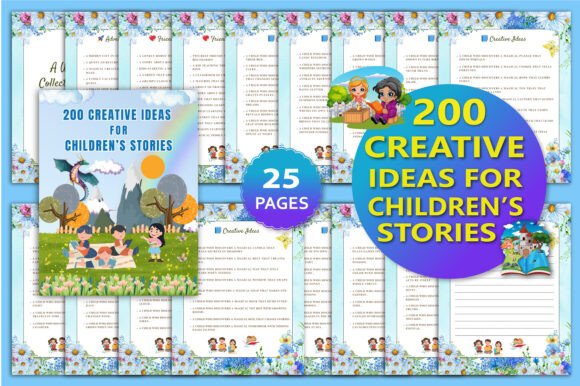
200 Creative Ideas for Children’s Stories: A Guide to Inspiring Young Minds
The world of children's storytelling is vast and ever-evolving, offering countless opportunities for creativity, learning, and imagination. Among the many resources available, 200 Creative Ideas for Children’s Stories stands out as a unique and engaging tool designed to spark curiosity and inspire young writers. Whether you're a parent, educator, or aspiring author, this whimsical planner offers a wealth of ideas that can transform simple moments into magical adventures.
What Makes 200 Creative Ideas for Children’s Stories Unique?
200 Creative Ideas for Children’s Stories is more than just a collection of prompts—it's a carefully curated guide that invites children (and adults) to explore their creativity through storytelling. Unlike generic story starters, this book is organized into five imaginative categories, each designed to nurture different aspects of creativity and learning.
- Animal Adventures 🐾: These prompts encourage kids to think about animals in new and unexpected ways, whether they’re heroes, misfits, or explorers.
- Magical Worlds ✨: From enchanted forests to floating islands, these ideas help children build rich, imaginative settings that bring stories to life.
- Adventure Exploration 🗺️: Perfect for those who love action and discovery, these prompts challenge kids to solve problems and overcome obstacles.
- Friendship Life Lessons 💖: These stories focus on empathy, kindness, and personal growth, making them ideal for teaching valuable lessons through fun narratives.
- Creative Discoveries 🎨: Designed to blend writing with art, these prompts encourage kids to express themselves in multiple formats, from drawing to storytelling.
Each idea is concise yet open-ended, allowing for flexibility in how it's used. Whether you're looking for a quick writing exercise or a full creative project, these prompts are easy to adapt and expand upon.
How Does It Compare to Other Storytelling Resources?
When evaluating tools for children's storytelling, it's important to consider factors such as structure, adaptability, and educational value. While there are many books and online resources that offer story prompts, 200 Creative Ideas for Children’s Stories distinguishes itself through its thematic organization and emphasis on creativity over rigid instruction.
For example, some story prompt books may focus heavily on grammar or narrative structure, which can be limiting for younger audiences. In contrast, this resource prioritizes imagination and play, making it more accessible for children of all ages. It also includes a variety of formats—such as printable PDFs and Canva templates—that cater to different learning styles and preferences.
Another key difference is the inclusion of both written and visual elements. While many resources focus solely on text-based prompts, this book encourages a more holistic approach by integrating drawing, coloring, and other creative activities. This makes it particularly useful for educators or parents looking to engage children in multi-sensory learning experiences.
Strengths and Limitations
One of the greatest strengths of 200 Creative Ideas for Children’s Stories is its versatility. The prompts are suitable for use in a wide range of settings, including home, classroom, and creative writing groups. They can be used as standalone exercises or integrated into larger projects, making them adaptable to various needs and schedules.
Additionally, the book’s emphasis on imaginative thinking helps children develop critical skills such as problem-solving, empathy, and self-expression. These are essential qualities for both academic and personal growth, making the book not only entertaining but also educational.
However, there are some limitations to consider. For instance, while the prompts are varied and engaging, they may not cover every possible theme or genre. This means that users may need to supplement the book with additional resources if they're looking for more specialized content. Furthermore, the book is primarily focused on storytelling rather than structured writing instruction, so it may not be the best choice for those seeking a more formal writing curriculum.
When Is This Resource the Right Choice?
200 Creative Ideas for Children’s Stories is an excellent choice for anyone looking to foster creativity in young minds. It’s particularly well-suited for:
- Parents who want to encourage their children's storytelling abilities at home.
- Teachers searching for engaging and flexible lesson plans that promote creativity and literacy.
- Child authors who are just starting out and need inspiration to begin their writing journey.
- Creative writing groups that want to incorporate fun and imaginative prompts into their sessions.
It’s also a great gift for young writers, dreamers, and doodlers who enjoy combining words with art. The book’s playful and encouraging tone makes it feel less like a traditional textbook and more like a magical adventure waiting to unfold.
Practical Examples and Real-World Use Cases
To better understand how this resource can be used, let’s look at a few practical examples:
Example 1: Classroom Setting
A teacher might use one of the "Friendship Life Lessons" prompts to start a group discussion about kindness. Students could then write their own short stories based on the prompt, followed by a class sharing session where they read their work aloud. This not only promotes creativity but also builds confidence and communication skills.
Example 2: Home Use
A parent might use one of the "Magical Worlds" prompts during a family storytelling night. The child could draw a picture of the imagined world, then write a short story about what happens there. This activity encourages both verbal and written expression while fostering a love for storytelling.
Example 3: Creative Writing Groups
In a writing group, participants could take turns selecting a prompt and developing it into a longer story. This collaborative approach allows for diverse perspectives and creative experimentation, making the process both fun and enriching.
Conclusion
200 Creative Ideas for Children’s Stories is a valuable resource for anyone interested in inspiring creativity through storytelling. Its unique structure, thematic organization, and emphasis on imagination make it stand out among similar products. While it may not be the perfect fit for every situation, it’s an excellent choice for those who value playfulness, flexibility, and a hands-on approach to learning.
Whether you're a parent, educator, or aspiring writer, this book offers a gateway to a world of possibilities. With its combination of prompts, templates, and creative freedom, it’s a tool that can help children—and adults—discover the joy of storytelling in new and exciting ways.